
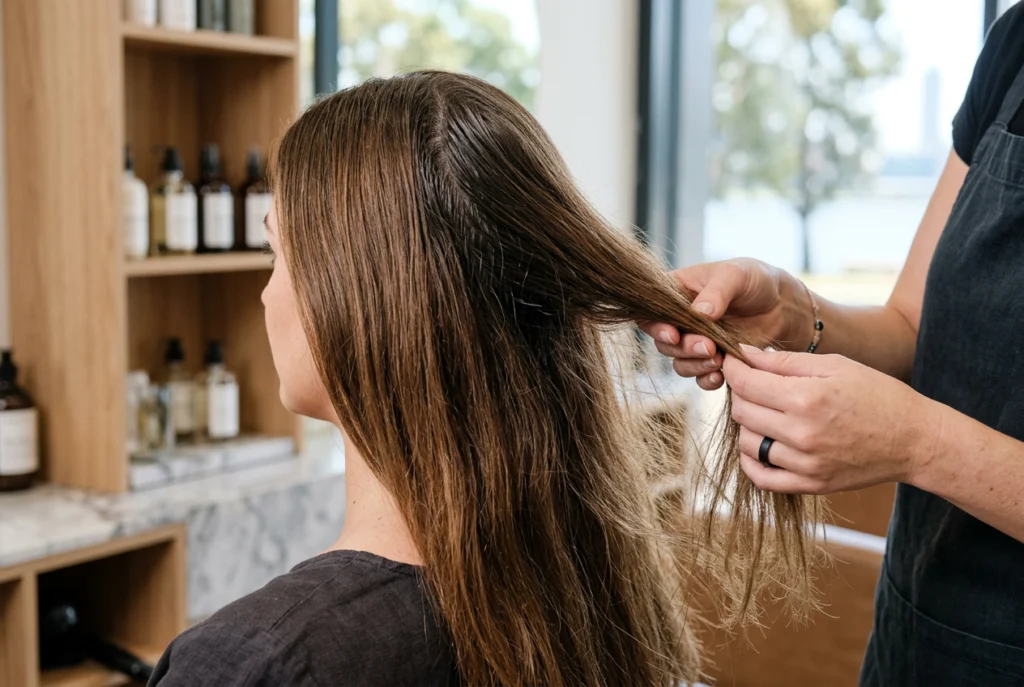
Many Perth women notice their scalp feels greasy by midday while the lengths and ends look dull, frizzy or brittle. This combination hair condition creates a frustrating cycle: washing more often to control oil often strips the ends further, while heavy conditioners on the scalp can worsen greasiness. The good news is that professional salons like Circles of Hair see this pattern daily and have clear, practical strategies that work with Australian hair and climate.
Why Oily Scalp and Dry Ends Happen Together
Sebaceous glands on the scalp produce sebum to protect and moisturise hair. When glands are overactive, often due to hormones, stress, humidity or product buildup, excess oil travels down the hair shaft. At the same time, the mid-lengths and ends receive less natural oil and can become dry from environmental exposure, heat styling and chemical treatments.
Official Australian health sources note that seborrhoeic dermatitis and dandruff often appear as oily or greasy scaling on the scalp, while the hair itself can feel dry further along the strand. The result is the classic mismatch: roots that need clarifying and ends that need moisture and protection.
Perth’s climate plays a role too. Hot, dry summers accelerate moisture loss from the hair shaft while occasional humidity can stimulate extra sebum production. Seasonal changes, combined with common styling habits such as frequent heat tool use or tight ponytails, can intensify the contrast between scalp and ends. Understanding these local factors helps tailor routines that actually work in Western Australia rather than generic advice written for different climates.
Gentle Cleansing That Respects Both Zones
The foundation of balance is a routine that removes excess sebum from the scalp without stripping the lengths. Over-washing with harsh surfactants can trigger the scalp to produce even more oil as compensation, creating the very problem it aims to solve.
At Circles of Hair we recommend starting with a targeted oil-control shampoo used primarily on the scalp. Massage thoroughly into wet hair at the roots, let it sit for 30-60 seconds to allow active ingredients to work, then rinse thoroughly. Follow with a hydrating or smoothing conditioner applied only from the mid-lengths to the ends, avoiding the scalp entirely. This zonal approach prevents the conditioner from migrating upward and contributing to greasiness.
For many clients, washing every second or third day works well once the scalp adjusts. On non-wash days a quality dry shampoo absorbs excess oil at the roots while adding texture and volume without the powdery residue that can build up in humid Perth conditions. Choose formulas that are translucent or lightly tinted to match your hair colour and avoid visible buildup at the part line.
Choosing the Right Products for Australian Hair
Professional salon products are formulated with higher concentrations of active ingredients than most supermarket options and are tested for performance in real salon environments. For oily scalp concerns, Circles of Hair stocks targeted solutions including:.
– Kérastase Symbiose Pureté Anti-Dandruff Shampoo for Oily Scalp – designed to purify while maintaining scalp balance and reducing the appearance of excess sebum.
– L’Oréal Professionnel Scalp Advanced Anti-Oiliness Shampoo – helps regulate sebum production with regular use and leaves hair feeling lighter.
– Dry shampoos such as K18 Airwash that refresh without dulling colour or weighing down fine hair, making them ideal for Perth’s active lifestyle.
These are available through our shop with free shipping over $150 or convenient salon pickup in Subiaco or Fitzgerald. When selecting conditioners or treatments for the ends, look for lightweight, non-greasy formulas containing ceramides, argan oil or hydrolysed proteins. Apply sparingly and focus on the driest sections. Avoid heavy butters or oils near the scalp, as they can migrate and contribute to the oily feeling at the roots.
Lifestyle and Maintenance Habits That Support Balance
Daily habits influence scalp oil production and hair moisture levels. Perth’s hot, dry summers and occasional humidity spikes can accelerate both oiliness at the roots and dryness at the ends.
Simple adjustments often deliver noticeable results within a week or two:.
– Brush hair gently from mid-lengths downward rather than aggressive scalp brushing that can spread oil further down the shaft.
– Use heat protectant before any hot tools and limit high-heat styling that can dehydrate the hair shaft and make ends more brittle.
– Choose leave-in treatments or serums designed for the ends only; a pea-sized amount smoothed over damp or dry ends helps seal moisture and reduce frizz without overloading the scalp.
– Avoid alcohol-heavy styling products that can dry the hair further and prompt the scalp to compensate with more sebum.
– Consider the frequency of chemical services such as colour or straightening; these can alter the hair’s ability to hold moisture and may require adjusted home care.
If sensitivity, persistent flaking or itchiness occurs, professional advice from a trichology-aware stylist or dermatologist is recommended. Australian health resources emphasise that seborrhoeic dermatitis and dandruff respond best to consistent, targeted care rather than aggressive stripping or unverified home remedies.
Common Mistakes That Make the Problem Worse
Many people unintentionally worsen the imbalance by following well-intentioned but misguided advice. Washing daily with a strong clarifying shampoo strips the scalp, prompting rebound oil production within hours. Applying rich conditioners or hair oils too close to the roots can block follicles and increase greasiness. Skipping conditioner entirely on the ends leads to more breakage and a rough texture that makes dry ends more obvious. Using the same product on the entire head ignores the different needs of the scalp versus the lengths. Recognising these patterns allows for smarter choices that support rather than fight the hair’s natural state.
Building a Sustainable Weekly Routine
A realistic routine for combination hair might look like this:.
Monday: Oil-control shampoo focused on the scalp, lightweight conditioner on ends only, air-dry or low-heat finish with a small amount of smoothing serum on the lengths.
Wednesday: Refresh with dry shampoo at roots if needed; light mist of leave-in treatment on ends. Avoid heavy styling products.
Friday: Full wash day with the same targeted shampoo and conditioner approach, followed by a weekly deep-conditioning mask on the ends only if dryness is pronounced. Use a wide-tooth comb on wet hair to minimise breakage.
Adjust frequency based on how your scalp and hair respond. The goal is not zero oil or perfectly uniform moisture every day, but a manageable balance that keeps hair looking fresh and healthy between salon visits. Track what works for a fortnight and refine the schedule with your stylist.
When to Seek Professional Help
If home care is not delivering improvement after consistent use of appropriate products, or if you notice increased hair shedding, scalp irritation or significant texture changes, book a consultation. Circles of Hair stylists assess scalp health, hair porosity and lifestyle factors to recommend personalised regimens and in-salon treatments that address both the oily scalp and dry ends without creating new imbalances.
Professional advice ensures you are using the right strength of active ingredients for your specific scalp condition and that any underlying factors, such as product sensitivity or seasonal changes common in Western Australia, are taken into account. Regular salon visits also allow for professional scalp treatments and precise product recommendations that are difficult to replicate at home.
Get in touch if the roots are oily and the ends are still dry.