
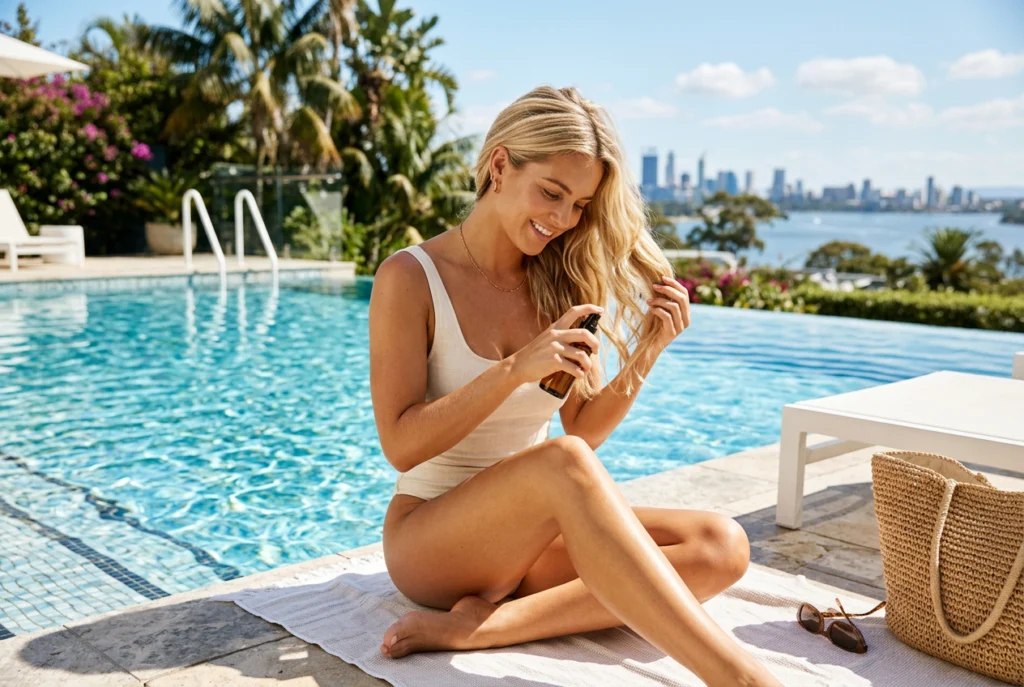
Swimming forms a core part of Australian summer life, yet chlorine in public pools and backyard spas creates a constant challenge for anyone with coloured hair. Chlorine and coloured hair simply do not mix well. The chemical actively strips artificial pigments, dries strands to the point of brittleness and causes colour to fade or turn brassy much faster than it would otherwise. If you colour your hair and swim even a couple of times a week, you need a reliable, repeatable routine to protect hair from chlorine before you enter the water, while you are in it and immediately after you get out.
At Circles of Hair in Perth we see the results every week. Clients arrive with once-vibrant reds that now look muddy, rich brunettes that have gone flat or cool blondes that have turned brassy after only a handful of swims. The difference between clients who maintain their colour and those who do not almost always comes down to consistent habits rather than expensive treatments. The good news is that the right steps, performed every time, keep colour looking fresh and salon-fresh all season long.
Why Chlorine Attacks Coloured Hair So Aggressively
Chlorine is added to pool water to keep bacteria under control, but it functions as a powerful oxidising agent on hair. It lifts the cuticle layer, allowing the pigment molecules that give coloured hair its depth and tone to leach out into the water. It also reacts with trace metals that can be present in pool water, shifting toner tones especially on blonde or highlighted hair. Saltwater from the ocean brings its own drying and colour-fading effects, but chlorine remains the primary colour thief for most Australian pool swimmers.
Coloured hair already carries a compromised cuticle from the colouring process itself. That structural change makes it far more porous and therefore more vulnerable than virgin hair. Frequent swimmers often notice dryness, increased tangles and visible colour loss within just a few days when they skip protection steps. The damage compounds quickly in Australian conditions where pool use peaks during the hottest months.
Pre-Swim Protection Steps That Deliver Real Results
The strongest defence begins before your hair even touches the pool.
Start by wetting your hair thoroughly with fresh water. Wet hair absorbs less chlorinated water, which means less pigment escapes during the swim. This simple step costs nothing and takes thirty seconds.
Next, apply a dedicated protectant designed for exactly this purpose. Circles of Hair stocks the Coastal Grl Saltwater and Chlorine Hair Protectant because it creates a light, effective barrier that shields strands from chlorine, salt and UV exposure. Work the product through from mid-lengths to ends, then style as normal. The formula is lightweight enough that it does not weigh hair down or leave residue.
Wear a swim cap whenever possible. A properly fitted silicone cap keeps the majority of water away from your hair. For clients who find caps uncomfortable or impractical, a tight braid or high bun still reduces the surface area exposed to chlorinated water extensions.
These three steps used together dramatically cut the amount of chlorine that reaches your colour. Clients who make them automatic report noticeably longer colour life between salon visits.
In-Pool Tactics for Regular and Competitive Swimmers
If you swim laps, train or simply spend extended time in the water, a cap moves from optional to essential. Competitive and serious lap swimmers protect hair from chlorine by combining the cap with the full pre-swim protectant routine every single session extensions.
Avoid unnecessary submersion when you can. Social swimming or time at the beach with children does not always require your hair to get wet. Keeping your head above water when possible preserves colour without sacrificing enjoyment.
Never leave hair twisted into a wet bun or tight ponytail after swimming. The combination of chlorine residue sitting against the hair and mechanical tension from the style causes breakage and further colour loss over time.
Immediate Post-Swim Recovery That Prevents Long-Term Damage
What you do in the first ten minutes after leaving the pool determines how much chlorine stays in your hair.
Rinse thoroughly with fresh water as soon as you can. A quick shower at the pool, beach or even a garden hose removes the bulk of chlorine before it has time to dry and continue oxidising the colour.
Follow the rinse with a chlorine-removing shampoo. Formulas designed to neutralise chlorine and lift metal deposits make a measurable difference. At Circles of Hair we recommend finishing every swim day with a rich, moisturising conditioner or a weekly deep-conditioning mask to replace the moisture the pool strips away.
Apply a hair oil or leave-in treatment while the hair is still damp. This step seals the cuticle and locks in hydration. Clients with extensions or heavily damaged coloured hair also benefit from a weekly bond-building treatment at home to maintain strand integrity.
Product Recommendation Straight From the Salon Floor
The Coastal Grl Saltwater and Chlorine Hair Protectant is the product we recommend and sell most often to swimming clients. It is lightweight, non-greasy and genuinely effective at creating that protective barrier. Many regular clients also pack it for holidays when they know they will move between pools and the ocean daily.
Pair the protectant with a quality chlorine-removal shampoo and a weekly mask and your colour investment stays protected far longer than with ad-hoc care change housing tenure lower income australian households.
Long-Term Colour Maintenance Strategies for Australian Swimmers
Even with excellent daily habits, frequent swimmers benefit from adjusting their colour schedule. Plan colour-correcting or toner-refresh appointments every six to eight weeks rather than stretching to ten or twelve. A quick professional refresh keeps brassiness from becoming established.
Ask your colourist about Metal Detox or similar professional treatments that remove metal build-up from pool water before it can react with your existing colour. These services add another layer of defence.
Protect hair from chlorine year-round by treating the pre- and post-swim routine as non-negotiable. The clients who stay most consistent see the clearest difference in how long their colour stays vibrant and healthy between visits.
Additional Salon Tips for Maximum Protection
Clients often ask about specific aftercare products beyond the protectant. We also recommend keeping a small bottle of the protectant in your swim bag so the habit never slips. A second bottle at home ensures you never run out during peak swimming season housing affordability stress how much rent can lower income households.
For those with very porous or previously damaged coloured hair, we sometimes suggest a leave-in conditioning spray layered under the protectant for extra moisture retention. The goal is always to keep the cuticle closed and the pigment locked in.
Regular trims remain important. Chlorine damage shows up first at the ends, and removing those damaged sections prevents the problem from travelling up the hair shaft.
Why Consistent Habits Outperform Occasional Treatments
One-off deep treatments or expensive masks cannot undo repeated chlorine exposure. The clients who maintain the best colour are the ones who treat protection as part of their swimming routine rather than a recovery step after damage appears. The difference shows up in both colour longevity and overall hair health.
Final Word From Circles of Hair
Coloured hair and swimming can absolutely coexist when protection becomes automatic. Wet your hair first, apply a proper protectant, wear a cap when practical, rinse immediately after swimming and follow with moisture and a mask. Repeat every single time and your colour will stay vibrant and salon-fresh throughout the Australian summer.
If your hair is already showing signs of chlorine damage, fading or increased dryness, book a consultation with our Perth team. We assess the current condition, recommend the right at-home products for your specific colour and lifestyle, and plan any necessary colour work to restore vibrancy while building stronger protection for future swims.
Summer in Australia is too enjoyable to miss because of hair concerns. With the right habits in place you can spend as much time in the pool or ocean as you like and still walk out with colour that looks as good as the day it was done.
Contact us before a heavy pool week if you want the barrier step explained.