
Most women in Perth notice their hair knots more after a shower or on windy days. The tangles feel sudden, yet the triggers are usually small, repeated habits rather than one dramatic event. Understanding why hair tangles makes the fixes feel obvious and achievable.
Hair is strongest when it is clean, dry and lying flat. The moment water, friction or tension enters the picture, the cuticle lifts and strands begin to catch. A few centimetres of lifted cuticle is all it takes for neighbouring hairs to lock together. Once that happens, every additional movement tightens the knot.
The Everyday Habits That Turn Smooth Hair Into Knots
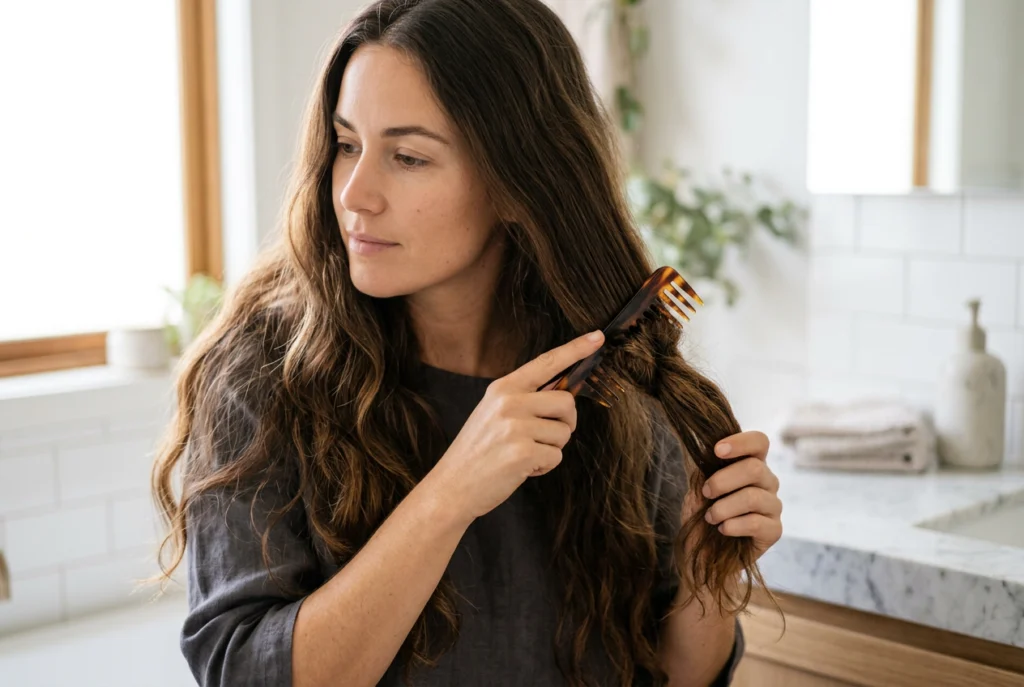
Hair tangles form when strands rub against each other or against surfaces while they are vulnerable. Wet hair is the weakest state. A purpose-built detangling brush with soft, flexible bristles makes short work of wet-hair knots without the usual tug and tear. Start at the ends, work in small sections, and use slow, steady strokes , the same method that keeps breakage to a minimum.
Dryness is the second major culprit. When the hair cuticle lifts, strands catch on one another. Skipping conditioner, rubbing wet hair with a towel, tight ponytails, over-brushing and constant heat styling are the usual suspects behind both breakage and tangles. Each of these actions creates friction points that lock strands together.
Breakage snaps the strand part-way along its length; shedding releases the whole hair from the follicle , two very different problems with different fixes. Losing 50 to 100 hairs a day is normal. More than that, or hairs that snap mid-length, points to a different issue. Once you can tell the difference, the right prevention steps become clear.
Many clients arrive at the salon convinced they are “losing too much hair” when the real story is mechanical breakage from daily habits. The visual test is simple. Shed hairs usually have a small white bulb at the root. Broken hairs taper to a point or show a clean snap. The texture of the lost hair also differs: shed hair feels smooth along its length, while broken hair often feels rough or thinned near the end.
How Weather and Lifestyle Amplify the Problem
Perth’s climate adds another layer. Hot, dry summers and cold, dry winters both strip moisture from the hair. Air-conditioning and heating do the same indoors. The result is hair that feels coarser and tangles faster than it did in more humid cities. Clients who travel interstate or overseas often notice their hair behaves differently the moment humidity changes. Even a short flight to Melbourne can leave hair feeling silkier simply because the air holds more moisture.
Lifestyle factors compound the issue. Regular gym sessions mean more frequent washing. Salt water or chlorine from the pool lifts the cuticle further. Even the simple act of pulling a jumper over your head can create micro-tangles that grow overnight. None of these are dramatic events on their own, but together they create a perfect environment for knots.
Simple Changes That Keep Hair Smoother Between Visits
The routine that works for most of our clients takes only a few extra minutes and uses tools you probably already own.
Start in the shower. Apply a lightweight conditioner from mid-lengths to ends. Let it sit while you finish washing, then rinse with cool water. Cool water helps the cuticle lie flatter, reducing the surface that can catch and knot.
When you step out, skip the vigorous towel rub. Instead, gently squeeze excess water with a microfibre towel or an old cotton T-shirt. Friction is the enemy here.
Next comes the brush. Tackling dry hair first reduces resistance, so any damp brushing that follows is gentler. Split your hair into sections and start at the bottom, teasing out knots at the ends before moving higher. Short, unhurried strokes do the job without snapping strands. Work through each section fully before starting the next.
At night, swap tight ponytails for a loose braid or a silk scrunchie. Silk reduces friction against the pillowcase, so morning hair stays smoother. If the knots keep coming back, bring that to Circles of Hair. If you use heat tools, apply a heat-protectant spray first and keep the temperature moderate. Over-heated hair becomes brittle and catches more easily.
Between washes, a wide-tooth comb or a dedicated detangling brush kept in your bag prevents small knots from becoming large ones. Run it through once in the afternoon if you feel tangles forming.
Protective styles also help. A loose top knot or half-up style keeps hair off the shoulders where friction from clothing and bags is highest. The key is never pulling the style so tight that it creates new tension points at the scalp.
Weekly deep-conditioning masks can also make a noticeable difference. Choose a mask suited to your hair’s porosity and leave it on for the recommended time. The extra moisture helps the cuticle stay smooth, which directly reduces the number of catch points.
Product Choices That Actually Reduce Tangles
Not every product marketed as “detangling” delivers the same result. Look for formulas that contain lightweight silicones or natural oils that smooth the cuticle rather than weigh hair down. Heavy butters can build up and make tangles worse over time. A good test is whether the product rinses clean and leaves hair feeling soft but not coated.
Leave-in conditioners or detangling sprays applied to damp hair create a protective film that reduces friction during brushing. Apply sparingly , a pea-sized amount for shoulder-length hair is usually enough. Too much product can attract dust and make hair feel heavier, which ironically increases tangling.
When to Bring the Problem to the Salon
If you are still seeing excessive knots or breakage after two weeks of these changes, the cause may sit deeper than daily habits. A consultation lets us look at your hair under good light, check scalp health, and tailor a home-care plan that fits your routine. We can also recommend professional treatments that strengthen the hair shaft and reduce future tangling.
Many Perth women book a quick trim or conditioning treatment every six to eight weeks. Regular surface maintenance removes split ends before they travel up the strand and create more catch points.
Chemical services such as colour or relaxers can change how hair behaves. If you have recently had a service and tangles have increased, the porosity of the hair may have changed. We can adjust your home-care products to match the new condition of your hair.
Scalp health matters too. Build-up from styling products or hard water can make hair feel rough and more prone to tangling. A clarifying treatment every four to six weeks often restores the natural smoothness that makes daily maintenance easier.
Tangles do not have to be part of your weekly routine. Small, consistent habits protect the hair you have and keep appointments feeling like maintenance rather than rescue missions. If your current routine is not delivering smoother results, we are here to help refine it.
Book a consultation or bring your questions next time you are in the salon. We will look at your hair together and build a plan that works with your lifestyle, not against it. The goal is hair that feels manageable every day, not just on the morning of your appointment.
Contact us if the knots keep coming back after the ends are combed.